• facebook
  • twitter
  • delicious
  • instagram
  • digg

Religious Calendar

Religious Calendar

The Islamic Cultural Center of Fresno commemorates and celebrates various Islamic Holidays and events. Please refer to our monthly calendar for more information about what events are being commemorated. The list below is organized based on the Islamic Hijri Calendar.

The Muslim New Year that starts in Muharram brings two significant events in Islamic history that are commemorated by many Muslims around the world — the establishment of the first Muslim community and the sacrifice of Imam al-Husayn.

The first is the Hijra, or the migration of Prophet Muhammad, peace and blessings be upon him, along with his community from Mecca to Medina to establish the first and exemplary Islamic state. The Hijra marks the beginning of the Islamic calendar. The Prophet Muhammad’s leadership provides Muslims with the foundational principles of social and political interactions with non-Muslims along with the means by which to enhance an Islamic identity in a pluralistic society.

The Hijra is acknowledged during the first month of the Islamic calendar, Muharram. Additionally, during the first ten days of Muharram, millions of Muslims commemorate the sacrifice of Imam al-Husayn, the grandson of Prophet Muhammad who was a great leader in the early years of Islamic history. Imam al-Husayn exemplified Islam’s unwavering stand for human rights and opposing tyranny. The tenth day of Muharram is called Ashura, which commemorates the day of the martyrdom of Imam al-Husayn (a).

1- Muharram محرّم

  • Ashura (9, 10 Muharram 1430): The martyrdom of Imam al-Husayn: (See Description below)
  • Martyrdom of Imam Zayn ul-Abideen (a) (25th)

2- Safar صفر

  • Birth of Imam Musa al-Kathim (a) (7th)
  • Arbaeen of Imam al-Husayn (20th)
  • Martyrdom of Prophet Muhammad (s) (28th)
  • Martyrdom of Imam Ali ar-Ridha (29th)

3- Rabi’ al-Awwal (Rabi’ I) ربيع الأول

  • Martyrdom of Imam Hasan al-Askari (8th)
  • Birthday of Prophet Muhammad (s) (12th): According to Sunni Muslims
  • Birthday of Prophet Muhammad (s) (17th): According to Shi’a Muslims
  • Birthday of Imam Ja’afar as-Sadiq (17th)

4- Rabi’ al-Thani (or Rabī’ al-Akhir) ربيع الآخر أو ربيع الثاني

  • Birth of Imam Hasan al-Askari (8th)

5- Jumada al-Awwal (Jumādā I) جمادى الاولى

  • Birth of Sayyida Zaynab (5th)
  • Birth of Imam Zayn ul-‘Abideen (15th)
  • Martyrdom: Sayyida Fatima az-Zahra (13th)

6- Jumada al-Thani (or Jumādā al-Akhir) جمادى الآخر أو جمادى الثاني

  • Birth of Sayyida Fatima az-Zahra (20th)

7- Rajab رجب

  • Birthday of Imam Muhammad al-Baqir (1st)
  • Martyrdom of Imam Ali al-Hadi (3rd)
  • Birth of Imam Muhammad al-Jawad (10th)
  • Birth of Imam Muhammad al-Hadi (10th)
  • Birthday: Imam Ali ibn Abu Talib (13th)
  • Death of Sayyida Zaynab (15th)
  • Martyrdom of Imam Musa al-Kathim (25th)
  • Mab’ath / Prophethood of Prophet Muhammad, (27th) According to Shi’a Tradition
  • Isra’ wa al-Mi’raj (The night journey and the ascension of Prophet Muhammad) According to Sunni Tradition (27th)

8- Sha’ban شعبان

  • Birthday of Imam al-Husayn (3rd)
  • Birth of Abu al-Fadhl Abbas (4th)
  • Birth of Imam Zayn ul-‘Abideen (5th)
  • Birthday of Imam al-Mahdi (15th)
  • The middle of Sha’ban (15th) The Night of Forgiveness is a special night and ICCF recommends fasting on this day.

9- Ramadan رمضان

This entire month of Ramadan is special and features several activities. Many nights of Iftar or Breaking-the-Fast are organized. Here are some major events;

  • Ramadan starts (1st)
  • *Passing of Khadija (a) (9th)
  • Birthday of Imam al-Hasan (15th)
  • First Night of Qadr (18th day/ Night of 19th) Observed by Shi’a Muslims
  • Second Night of Qadr (20th day / Night of 21st) Observed by Shi’a Muslims
  • Martyrdom of Imam Ali (21st)
  • Third Night of Qadr (22nd day / Night of 23rd) Observed by Shi’a Muslims
  • • Laylat al-Qadr / Night of Power (26 day / Night of 27) Observed by Sunni Muslims

10- Shawwal شوّال

  • Eid al-Fitr (1st): The Center celebrates the day of Eid Al-Fitr with prayers at 8:00 AM and serves breakfast afterwards
  • Martyrdom of Hamza ibn Abdul Muttalib (15th)

11- Dhu al-Qi’dah ذو القعدة

  • Birth of Imam Ali ar-Ridha (11th)
  • Martyrdom of Imam Muhammad al-Jawad (29th)

12- Dhu al-Hijjah ذو الحجة

  • Martyrdom of Imam Muhammad al-Baqir (7th)
  • The Day of ‘Arafa (9th): The day and night before Eid al-Adha are considered special. It is the most spiritual moments of Hajj as Pilgrims stand on the plight of ‘Arafat asking Almighty for forgiveness. Fasting is recommended on the 9 of Dhu al-Hijja.
  • Martyrdom of Muslim ibn ‘Aqil (9th)
  • Eid al-Adha (10th): The Center celebrates the day of Eid al-Adha with prayers at 8:00 AM and serves breakfast afterwards
  • Eid al-Ghadir (18th): Observed by Shi’a Muslims
  • Eid al-Mubahila (24th): Observed by Shi’a Muslims

NOTE: The Islamic Center celebrates only Eid al-Fitr and Eid al-Adha on the same day of Eid. The rest of the holidays or events may be celebrated or commemorated at a different day during that week. Refer to the ICCF Monthly Calendar for more details.

Ashura Commemorations:

Ashura, is the 10th day of the month of Muharram, which is the first month in the Hijri Calendar. In Islamic history, Ashura, which took place on the 10th of Muharram, 61 A.H. (Oct. 10, 680), is a solemn day when Muslims commemorate the death of Imam al-Husayn (a), the third Imam and grandson of Prophet Muhammad, peace be upon him.

Muslims hold various forms of public and private events to mourn the martyrdom of and to connect with the suffering and death of Imam al-Husayn. His martyrdom is widely interpreted as a symbol of the struggle against injustice, tyranny, and oppression.

On the night and day of Ashura, Muslims visit the tomb of Imam al-Husayn in Karbala, Iraq. In many communities spread around the globe, the mood is solemn with extensive rituals, mourning processions and speeches which culminate in performances re-enacting the martyrdom of Imam al-Husayn.

Who is Imam al-Husayn?

Imam Husayn, c.626–680, third Imam in Shi’a tradition; son of Imam Ali & Fatima, daughter of Prophet Muhammad. With the assassination of Imam Ali in 661 and the death of Imam al-Hasan in 50 AH, the caliphate passed out of Imam Ali’s family.

After the death of the Umayyad Caliph Mu’awiya, his son Yazid assumed the leadership and requested allegiance from Imam al-Husayn. Instead of clashing with Yazid in Madina, Imam Husayn migrated to Iraq but was surrounded by the army of Yazid outside of Kufa. Imam al-Husayn led an insurrection of 72 members whom were all killed on the 10th of Muharram in 61 A.H. (Oct. 10, 680), in Karbala.

How does the Islamic Center commemorate Ashura?

Islamic Cultural Center of Fresno commemorate the annual tragedy of Ashura by holding various memorial events that tells the stories of the sacrifice of Imam al-Husayn, his courageous leadership and his devotion to the preservation of Islam.

Commemoration events extends over a period of 40 days in which the Qur’an is read and reflected upon, stories are told about the leadership of his sister Lady Zaynab, especially her courageous stand in the court of Yazid after the death of Imam al-Husayn.

Hajj

Pilgrimage to the City of Makkah *

Every Muslim who is able must make the pilgrimage (Hajj) to the city of Makkah at least once in his or her life. This pilgrimage occurs every year during the month of Dhul Hijjah, the 12th month of the Islamic lunar calendar. Those who make the pilgrimage follow in the footsteps of Abraham, “the father of the prophets.” Four thousand years ago, Abraham along with his wife, Hagar, and his son, Ishmael, set out on a vast journey wandering through Babylon, Syria, and Arabia. They crossed vast hills, rivers, and deserts until arriving in the land of Makkah where Abraham received a revelation from Allah. The Qur’an states:

And remember when we showed Abraham the site of the House saying… Do not associate with Me anything, and purify My house for those who circle around it and stand to pray and bow and prostrate themselves. And proclaim among the people the pilgrimage. They will come to you on foot and on every lean camel from every remote path that they may witness the benefits for them and mention the name of Allah during the appointed days over what He has given them (22:26-28)

Abraham and Ishmael were instructed by Allah to raise the cubic structure, the Ka’aba. According to the Qur’an, it is the, “First house made for mankind” (3:95). Its original foundation was built at the dawn of creation by Prophet Adam. Abraham was then ordered to proclaim the pilgrimage to humankind. Unconcerned as to who would hear his voice in the desert land of Makkah. Abraham climbed atop a nearby mountain and proclaimed to humanity the divine message of the hajj. This call has passed through the distance of time, and it still reverberates to the millions of Muslims around the globe who answer Allah’s call to make their pilgrimage.

Significance of the Hajj

The hajj is the supreme symbol of universal brotherhood, and it is the greatest annual congregation in the world. Every year in Makkah, millions of Muslims from diverse origins stand shoulder-to-shoulder, clad in the barest of materials (two pieces of white cloth) and perform the same rituals. Not one person can be distinguished from another on the basis of wealth, lineage, or power. The most powerful leaders are on the same level as the general public. All artificial or human-imposed distinctions among humankind are lifted, and people have, for the span of a few days, the opportunity to know each other solely as brothers and sisters of humanity.

The hajj also develops the human soul. Every human being (whether aware of it or not) is traveling toward Allah, and the essential part of the spiritual development in life is to recognize the returning journey. The hajj not only represents a physical journey, but also compels the pilgrim to demonstrate his or her willingness to leave behind everything in his or her life for Allah.

Allah has made it known that one of the ways to approach Him for forgiveness is to journey to His house—the Ka’aba in Makkah. Once, Imam Ali was with a group of his followers in the vicinity of the Ka’bah when they saw a man holding the cloth cover of the Ka’aba while supplicating, “O Keeper of the House! This house is Your house, and this guest is Your guest. Each guest sees goodness from its host. Tonight, let Your goodness be the forgiving of my sins.” Imam Ali asked his followers, “Did you hear the words of this man?” They said, “Yes, we did.” Imam Ali replied, “Almighty Allah is more forgiving than to drive away His guests.”

The sense of equality and humanity that is present during the hajj should be reflected in one’s own everyday life. The person who has experienced the hajj ought to return home freed from the erroneous notions of race and class that often are prevalent in some societies. For many Muslims, the hajj serves as an enormous convention or conference in which information is exchanged and problems are solved.

Since the advent of Islam, the hajj has been one of the major unifying cultural factors for Muslims. This is based on the fact that every year Muslim delegates from every civilization meet in one place to discuss and solve Islamic matters.

The Rites of Hajj

The beginning of the pilgrimage is marked by proclaiming, “Labbayk, Allahumma, Labbayk” which means “I am here, O Lord, I am here!” This should be followed by, “You, Who have no partner—I am here! Surely all praise and blessings are Yours, and the Kingdom—I am here, O Lord, I am here!”

During the hajj, the millions of pilgrims present engage in circling the Ka’aba (a practice called tawwaf). The pilgrim’s circling (tawwaf) around Allah’s House symbolizes one’s dependence and needed assistance from Allah. The revolutions (tawwaf) also illustrate how one’s ultimate being constantly revolves around Allah.

After tawwaf, the pilgrims scamper between two small mountains called Safa and Marwa. This rite reenacts Hagar’s search for water for her infant son Ishmael. Alone in the desert, Hagar and her baby were in desperate need for water. She ran back and forth looking desperately for some hint of moisture in the desert sands. Seeing Hagar’s effort, Allah produced for her the spring of Zam Zam—a spring of cool, pure water which gushed forth at Ishmael’s feet and continues to flow until this very day. By imitating Hagar’s search, the pilgrims remember her plight, but also assimilate a message within themselves that they cannot sit and wait for Allah’s blessings to unfold magically upon them. Rather, if people are in need of something, they should work hard for it and hope for the munificence of Allah.

The most significant day of the pilgrimage is the Day of Arafat. Arafat is a desert outside the city of Makkah in which all the pilgrims must stand from noon to sunset and commune with Allah. The time spent in Arafat marks the real essence of the hajj; Prophet Muhammad said, “The hajj is Arafat.” In Arafat, pilgrims leave behind all material possessions except for the two pieces of cloth worn during their pilgrimage—a symbol of returning to the same condition in which one was born. The vast gathering consists of millions of people all dressed alike standing in the same place at the same time; this represents the true origin and fate of humanity. We are born from dust; we live for a short while, and then we are resurrected from dust again. The scene of Arafat resembles what the Day of Resurrection will be like; countless of individuals are pieced back together from dust to withstand judgment by Allah.

At a place called Mina, on the outskirts of Makkah, the pilgrims throw pebbles at Satan. By stoning pillars, which are physical representations of Satan, pilgrims demonstrate their continuing struggle and treatment of fighting against Satan, who has sworn to be the enemy of humankind. Pebble throwing is also another historical reenactment of Prophet Abraham and Ishmael’s sacrifices for Allah. Abraham, along with his son Ishmael, were on their way to fulfill the command of Allah; the slaying of his son, Ishmael. Prophet Abraham encountered Satan three times disguised as a man. Satan attempted to discourage Abraham. Instead of listening to Satan’s dissuasions, Abraham threw stones at him in each of these three areas.

At the end of the hajj, each pilgrim sacrifices an animal like Abraham did in lieu of his son. The sacrifice denotes the pilgrim’s willingness to adhere to Allah’s commandments unconditionally. The meat of the animal must not be wasted; one-third may be kept for personal consumption, the other two-thirds should be divided equally among friends and the indigent.

For more information see the Hajj guidelines here.(Click Here)

Ramadan

Ramadan Mubarak / Blessed Ramadan:

Fasting (Sawm)

Source: Discovering Islam, by Imam Seyed Mustafa al-Qazwini

Almost every religion encourages some form of fasting. Prophet Muhammad and the prophets before him all called upon their followers to fast.

The Qur’an states, “O you who believe! Fasting has been prescribed for you just as it was prescribed for those before you so that you may be pious and learn self restraint” (2:183).

Islam prescribes complete fasting. It requires complete abstinence from food, drink (including water), smoking, and sexual activity. Hence, from dawn until the time of the sunset prayer, one must abstain.

Although fasting is recommended on other significant Islamic dates, it is however, required every day during the month of Ramadan, the ninth month of the Islamic lunar calendar. The month of Ramadan is revered and honored by all Muslims. It was on a particular night called the “Night of Destiny” (Laylat al-Qadr), during the month of Ramadan that the Qur’an was revealed to the Prophet. Muslims believe that on this night, every year, Allah determines the fate of each person for the year to come. Therefore, worshiping on the “Night of Destiny” is considered, “Better than a thousand months” 97:3.

Although the exact night of the “Night of Destiny” is not known, Islamic scholars approximate the date to fall on either the 19th, 21st, 23rd, 25th, or 27th of the month of Ramadan. Therefore, Muslims copiously worship Allah on these specific nights.

The Qur’an states:Verily, We have sent it [Qur’an] down on the Night of Destiny and what would make you know what the Night of Destiny is? The Night of Destiny is better than a thousand months; He sends down the angels, and the Spirit during it by His will for every matter; Peace! Till the rising of the dawn. (Qur’an 97).

As with prayers, the benefits of fasting are innumerable. Fasting strengthens one’s willpower, teaches discipline, encourages sympathy with the poor, breaks harmful habits, strengthens one’s health, and establishes a sense of religious brotherhood and sisterhood. However, the strongest benefits are spiritual. Fatima az-Zahra, the daughter of Prophet Muhammad said, “Fasting is to deepen and strengthen faith.” Fasting sharpens the spiritual awareness and inspires a sense of gratitude toward Allah.

Apart from refraining from food and drink, Muslims are also encouraged, during the month of Ramadan, to give additional charity toward the poor and the needy.

________________________________________

Reflection on Ramadan at ICCF by a United Methodist Retired Pastor

WHO’S THE GREATEST? by Larry Patten

“Whoever welcomes one such child in my name welcomes me, and whoever welcomes me welcomes not me but the one who sent me.” Mark 9:30-37

My friend invited me for dinner. A prayer would be said before the meal and guests like me were reassured we wouldn’t have to join, but were welcome to gather with our hosts in praising . . . Allah.

I was a non-Muslim invited to gather at Fresno’s Islamic Cultural Center to enjoy a meal and share with neighbors during Ramadan.

As an adult, the who’s-the-greatest answer in any form is meaningless. On my best days I only have interest in strengthening my faith, of becoming more Christ-like.

Ramadan represents the holiest time of year for Muslims. Among the Ramadan obligations is daily fasting. From sunrise to sunset, a person does nothing (including eating or drinking) that represents pleasure. The day’s final meal takes on significance. On every day the devout Muslim prays on five separate occasions. But during this time of celebration and sacrifice, the prayer before the dinner (Maghrib or sunset prayer) is likely more keenly felt . . . if only because of a growling stomach!

Truthfully I don’t understand much of this. Raised in a 1950s American suburb, I wasn’t aware of any Muslims, Hindus, or Buddhists. The “strangest” religious expressions came from Roman Catholic classmates or the very few Jehovah’s Witnesses I knew. Along with other elementary school students, I remember being jealous of a kid who didn’t stand or say the Pledge of Allegiance.

“Why?” we asked.

The whispered response, in the playground or from a teacher, was, “He’s a Jehovah’s Witness.” Different. Strange. Other. If there were more detailed reasons given, they zoomed over my ten-year old crew cut.

There were kids not-like-me that attended Mass on Sunday. (Why not call it church like “normal” people?) They had lists of movies the Pope allowed them to see. Or not see. (Didn’t the Pope’s film reviewers realize they created a must-see cheat sheet?) I attended a Baptist church. Wasn’t having communion a few times a year—instead of every darn week—sufficient? Yes, those Catholics were different. Strange. Other.

Nowadays, I can’t help but think of faiths like Islam and Judaism and the numerous divisions of Christianity (there are at least 635 Christian-based denominations in the United States, perhaps more by the time this is published), when I read Jesus’ concern that his disciples argued over “who was the greatest.” (Mark 9:34.)

When I was a kid, the who’s-the-greatest answer was easy. Me. My experiences. I may have been fleetingly envious of my seated, silent classmate during the Pledge, but when only one person sat and the other thirty were “just like me,” I did the social math. More numbers = the right way. Right?

At the Ramadan prayer, just before breaking the fast with my Muslim neighbors, I observed a way of faith different than mine. As an adult, the who’s-the-greatest answer in any form is meaningless. On my best days I only have interest in strengthening my faith, of becoming more Christ-like. I often fail at my efforts, but through it all the who’s-the-greatest seems, well, childish.

So what will we teach our children?

I watched my neighbors bow. I heard the Arabic language, guttural and with unexpected pauses, and couldn’t identify a single word. And yet, as the Qur’an was recited, I understood at least three things.

I was welcome. I had been told, “Come and join.” Being there was a prayer born of invitation.

There was food in my future. Religious or not, everyone fasts. Where do you think we get the word for the day’s first meal? Break the fast. Breakfast. Some eat too much; too many have too little. But every human anticipates a meal to give our bodies energy. Jesus, accused of being a glutton and drunkard, knew the joy of the meal. And even more, and I thought of this during Ramadan prayers, of the joy of sharing table with others. Break the fast. Break the bread. Break into conversation with the one next to you and across from you.

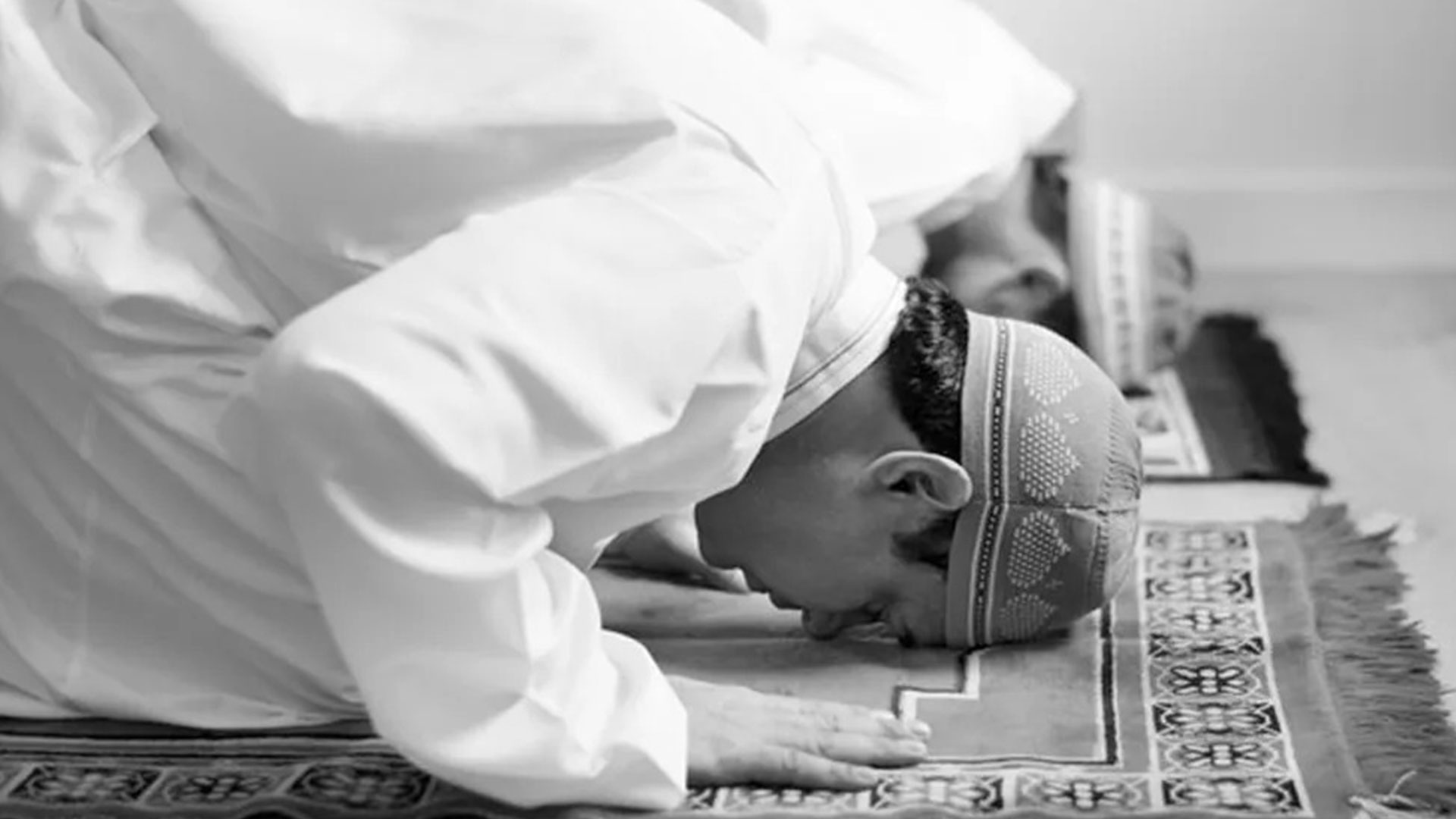
Lastly, as I witnessed men bowing low—a few in business suits and others arriving from a day of sweaty labor—I noticed a boy. My friend, the one who invited me to break Ramadan’s fast, has several children. One is a seven-year old. As my friend prayed, his child mimicked him. Words were shared, bodies moved in harmony. And there was this boy who joined his dad. Who, like me as a kid, saw this as simply what you do because this is what his family does.

Who is the greatest? My friend’s son was born after September 11, 2001. That horrific pain will always be “history” to him, a long ago event. But, for all children born since then, I humbly hope and pray for a world of compassion, where no one is odd, different, other.

What a silly question those disciples debated.

In Mark’s Gospel, to reveal his follower’s pettiness, Jesus embraced a child. I imagine Jesus—perhaps before the meal began, before a fast was broken—inviting that child to come forward and to remind others, then and now, of the power of welcoming.

in Peace,

Larry Patten

(written on September 8, 2009)

Larry Patten is a writer and United Methodist pastor.