• facebook
  • twitter
  • delicious
  • instagram
  • digg

Prayer

Prayer

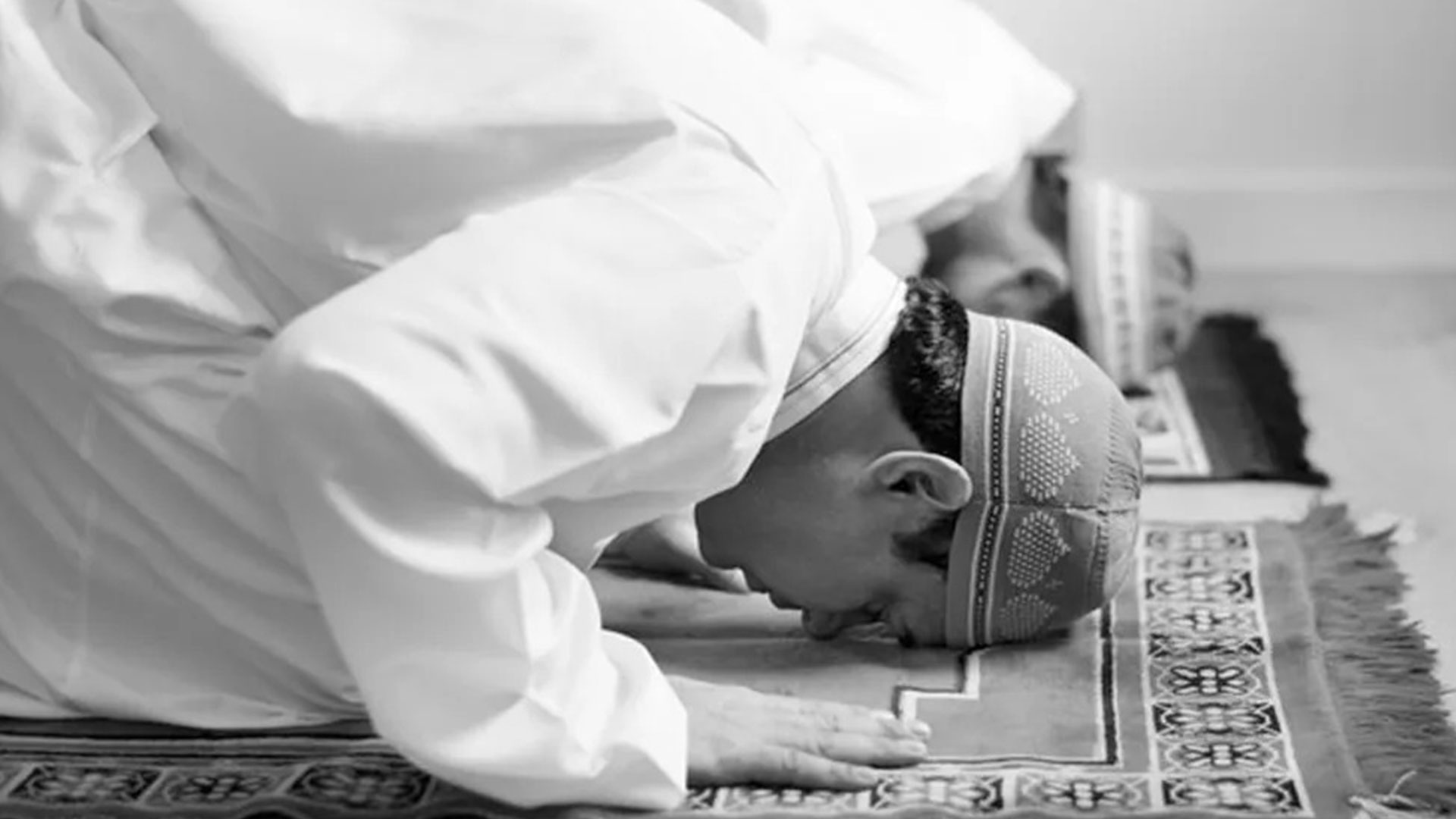
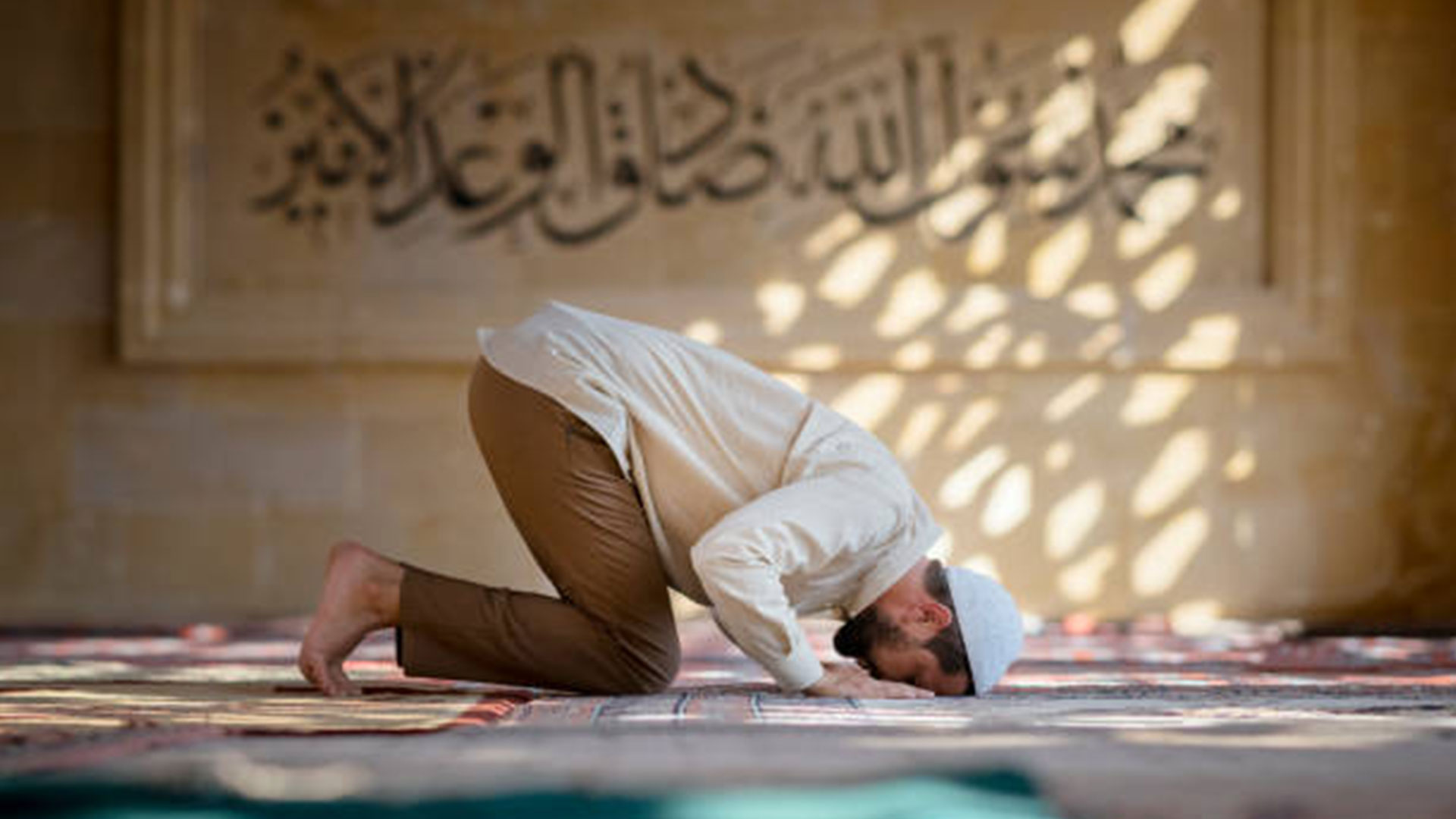
Salah/Salaat(Arabic: صلاة ṣalāh) is the practice of formal prayer in Islam. Its supreme importance for Muslims as indicated by its status as one of the Five Pillars of Sunni Islam and one of the Ten Practices of the Religion of Shi’a Twelver Islam. Salah is a ritual prayer, having prescribed conditions, a prescribed procedure, and prescribed times.

Performing salah is obligatory, with a few dispensations for those for whom it would be difficult. To perform valid salah, Muslims must be in a state of ritual purity, which is mainly achieved by ritual ablution or Wudhu according to prescribed procedures. The place of prayer should be clean. In a few cases when a person is bleeding, salah can’t be performed.

Salah consists of the repetition of two or more units of a prescribed sequence of actions and words. One complete sequence is known as a raka’ah (pl. raka’āt). The number of obligatory (fard) raka’āt varies according to the time of day or other circumstances (such as Friday congregational prayers). The minimal, obligatory raka’at may be supplemented with acts which are optional but are considered meritorious. There are also dispensations from some or all of the prescribed actions for those who are physically unable to complete them. The prescribed words of the prayer remain obligatory.

After Salah, often du’as (supllications) are recited. Ceratin hadiths(reports from Prophet Muhammad (s) and the Holy Imams (a) recommends reciting Ayat al-Kursi and Surah al-Falaq, al-Nas, etc after Salah

Step by step guide to perform the prayers (according to Shi’a tradition).(Click here)

The Holy Quran

Qur’an, The Holy book of Islam:

Here are a few resourceful links about Qur’an:

  • The Qur’an at USCA (click here) comprehensive search engine and topical index, includes three translations side by side
  • Qur’an Recitation(click here)
  • Multilingual Qur’an (click here) Includes Arabic text, three searchable translations
  • Holy Qur’an Resources on the Internet (click here) Qur’an in many languages
  • Tafseer Al-Mizan (click here) Qur’an Tafseer in English
  • Ahlul Bayt Digital Islamic Library Project – al-Islam.org (click here)

To receive your complimentary copy of the Qur’an, please email [email protected]

The Prophet Muhammad (s)

In 6th century C.E. Arabia, the majority of people were pagans. They lived in tribes, each with its own leader. Some were agriculture and cattle farmers, others were merchants and traders, while others raided tribes for booty as a means of survival.

It was into this society, in 570 CE, that Prophet Muhammad (Peace and Blessings be upon him and his family) was born within the tribe of Quraysh, in the city of Makkah. When his parents died, his grandfather looked after him.

When his grandfather died, his uncle, Abu Talib cared for him. While growing up, Prophet Mohammad became known as “Muhammad the truthful, the trustworthy” (as-sadiq, al-amin).

Early into his adulthood, Muhammad worked for a successful widow, Khadijah, who was so impressed with his honesty that she asked him to marry her. The Prophet was twenty-five, and they remained in a monogamous marriage until Khadijah’s death twenty-five years later.

Often, Prophet Muhammad would take a respite from the bustle of Makkah by traveling to a cave for periods of reflection. During one such time, when Muhammad was forty years old, he heard the voice of an angel named Jibra’il giving him a command:

“Recite in the Name of your Lord who creates, creates man from a clot. Recite! Your Lord is the Most Bountiful, who taught the use of the pen, taught humankind that which they knew not” (96: 1-5)

Prophet Muhammad repeated the words until he had memorized them. The Prophet rushed home and told his experience to his wife, Khadijah, who comforted and reassured him. Khadijah and the Prophet’s young cousin, Imam Ali ibn Abu Talib (A) were the first people to understand and accept that Allah had chosen “the truthful, the trustworthy” to deliver Allah’s final guidance. Prophet Muhammad continued to receive revelations for over twenty years.

As time passed, it became clear to the ever increasing number of people that Prophet Muhammad was indeed the Messenger of Allah. The least receptive people were the powerful Makkans who trafficked in idols and slaves. They benefited mostly from idol worshiping and pilgrim trade. The Makkans treated Prophet Muhammad with derision. Despite this, Prophet Muhammad continued to deliver the revelations of Allah’s mercy and justice, which were welcomed by the poor and oppressed.

The Makkans were becoming more and more intolerant of Prophet Muhammad and felt threatened by the messages he was advocating, such as the oneness of Allah. With the increasing number of converts to Islam within the region, Prophet Muhammad was becoming a serious threat. In an attempt to dissuade the expansion of Islam, Quraysh exiled the Prophet, his family, and followers from Makkah. Quraysh then sanctioned an economic blockade on trade and association with the Muslims.

For three years, the Muslims were sheltered in the valley of Abu Talib, near Makkah. In conditions of hardship and hunger, the Muslims often faced the ration of one date a day; and at times, two shared the date. Yet, because of the Muslim’s tenacious faith, the siege ended unsuccessfully.

Shortly after the siege ended, the Prophet was once again faced with tribulation. The two most

influential and dearest people to the Prophet died; his uncle, Abu Talib and his beloved wife, Khadijah.

Overwhelmed by grief, the Prophet declared that year as “a year of sadness.” No longer being protected and supported by his uncle, the Prophet, became more vulnerable to the escalating pressure by Quraysh.

Leaders from the distant town of Yathrib secretly invited the Prophet and his followers to settle in their hometown and preach the word of Islam. Before migrating to Medina in 622 CE, the Prophet narrowly escaped an assassination attempt in Makkah. The migration from Makkah to Madina became known as the Hijrah, which is also the starting point of the Muslim calendar.

Prophet Muhammad was received with excitement and jubilation in Madina, where he became head of what was to become the first Islamic state. Throughout the first ten years in Madina, Muslims witnessed several occasions that were to become milestones in the history of Islam. The primary task was building the mosque in Madina. The Prophet himself participated in building the mosque of which also housed the Prophet’s home.

Companions of the Prophet built their homes in close proximity to the mosque to be near the Prophet. It was necessary that the Prophet create a center where its members could assemble. The mosque was not only a place of worship, but also a center of social, political, and educational services.

The unity of brotherhood was introduced. There were two major tribes in Madina: Muhajreen and Ansar. The Ansar were divided into two groups: Aws and Khazraj; they fought for 120 years. Under a common purpose [Islam], the Prophet appeased the animosity that existed among the tribes by forming them as brethren of one another. “Now you should become brothers in faith, by pairs,” the Prophet said to his followers. By this method, the Prophet insured the political and spiritual nature of his nation. Today, the unity of brotherhood continues to remain a tremendous act of equality among Muslims. Islam is the foundation on which all races, nationalities, cultures, socioeconomic levels, and genders can be united by religious kinship.

The Prophet made the institution of matrimony easier. The gift in marriage (dower) was made moderate, and inter-marriages with other tribes became more accessible. Socioeconomic or ancestral descent was no longer a major factor in marriage. The establishment of marriage became a form of uniting, securing, and promoting Islam within various tribes and nations. Marriage not only symbolized the religious union of a man and a woman, but also, indirectly influenced and affected social and political ties. The Prophet said, “He who wishes to appear before Allah with a pure soul, should marry.”

The Prophet set the example of marriage with his own daughter, Sayyida Fatima az-Zahra(a). Although many companions had proposed marriage to Sayyida Fatima, they were aware that the marriage of Fatima was not going to be based on affluence, rank, or descent. The men knew that the person that resembled the Prophet in matters of truthfulness, spiritual merit, and moral excellence would be none other than Imam Ali (a). However, the Prophet (by direction of Allah) told the suitors that the marriage of Fatima would only occur by divine order.

When Imam Ali approached the Prophet to seek his blessings to marry his daughter, he was overcome with shyness. The Prophet encouraged him to speak. Ali proposed, but the Prophet did not answer him immediately. The Prophet then consulted Fatima, and she accepted. The marriage of Ali and Fatima was then solemnized with a symbolic marriage dower.

From the migration to Madina, the Prophet faced continual threats from Quraysh and the polytheists of Makkah, and the non-Muslims in Madina. Peace and security were paramount, yet attempts to keep peace within the region by the Prophet were futile. The opposition in Makkah mobilized its troops to demolish the newly established state in Madina.

Standing firm in the face of military aggression, the Prophet was compelled to defend Islam in what was called the “Battle of Badr.” The battle erupted only two years into the hijrah (migration), and although the Prophet’s army was far outnumbered, they triumphed. A story about the battle in the Qur’an reveals that Allah had sent an army of angels to assist the Muslims against the Makkans.

The Muslims’ success in the battle gave immense prestige to the infant Islamic community in Madina and dealt a major blow to the pride of the Makkans. The following year, the Makkans wanted to avenge their defeat. On a hill called Uhud, west of Madina, the second major battle was fought in what has become known as the “Battle of Uhud.” In the beginning of the battle, the Muslims showed signs of victory; however, the insubordination of some Muslim men caused the final setback in the battle in which many Muslims were injured and lost their lives. The Prophet himself was injured, and he lost his uncle, Hamza ibn Abd al-Muttalib. Although the Battle of Uhud was a set back for the Muslim community, they were able to remain in Madina. Yet, many other victorious battles of defense consolidated the Muslims; hence, Islam became an ever increasing spiritual and political force in Arabia which also paved the way to the conquest of Makkah.

In the ninth year of Hijrah (630CE), Prophet Muhammad and his followers entered Makkah after a peaceful surrender by the Makkans. The Prophet went directly to the Ka’aba. The Prophet began to perform the circumambulation (tawaf) around the Ka’aba and turned toward the three main idols that had been stationed above the entrance of the Ka’aba.

The Prophet Muhammad destroyed them while reciting, “And say, truth has arrived and falsehood has perished, for falsehood is bound to perish.” Subsequently, hundreds of idols were destroyed inside and around the Ka’bah. The destruction of the idols symbolized the arrival and the proclamation of truth and the end to falsehood. Islam was now home. The Prophet then granted general amnesty to all the Makkans who had fought against him for twenty-two years. The Prophet addressed them with these words:

You have been my very and reasonable countrymen. You refuted my prophethood and turned me out of my home, and when I took refuge in a far-off place, you rose to fit against me. You killed my uncle and my best companions. However, in spite of all these crimes of yours, I forgive all of you and make you free, and declare that you may go after the pursuits of your life.

During the tenth year of hijrah, the Prophet performed the “Farewell Hajj.”40 On the day of Arafat, over 100,000 pilgrims were present when the Prophet commenced his sermon by saying:

“O People! Hear my words, for it possible that I may not meet you at this place in the future. O People! Your blood and property (honor and reputation) are forbidden toward one another till the day you meet Allah.

O People! Your women have rights upon you and you also have rights upon them. You should treat them with kindness and love, and you should provide them with a comfortable means in life.”

Quraysh: A major tribe in Mecca, of which the clan of Hashim was a part and to which Prophet Muhammad belonged.

Prophet’s Parents: Abdullah Ibn Abd al-Muttalib & Amina, daughter of Wahab.

Paternal Grandfather: Abd al-Muttalib Ibn Hashim.

Abu Talib: Paternal uncle of the Prophet, father of Imam Ali, one of the chiefs of Mecca and nobleman of Quraysh. He was famous for his generosity, bravery, and dedication in protecting his nephew, Prophet Muhammad. He had accepted Islam and supported the Prophet until the end of his life.

Khadijah: The first and most revered wife of the Prophet. She was the first female to embrace Islam. Khadijah bore the Prophet six children; two sons, Qasim and Abdullah; four daughters: Ruqayyah, Zaynab, Um-Kulthum, and Fatima. The male children died before the ordination of his prophethood. The daughters survived beyond the advent of their father’s prophethood. Khadijah was known for her noble traits and sincere dedication to the Prophet.

Prophet Muhammad once described Khadijah in the following statement: “I have not acquired a better wife after her, she believed in my prophethood at a time when people rejected it. She placed her wealth at my disposal when people deprived me of attaining it, and Allah gave me, only through her, children, and not from any other woman.”

Angel Jibrail is one of the four Archangels and is considered one of the greatest of all angels since he was the channel through which the Divine books and the Scriptures were revealed from God to the Prophets. The other three angels: Izra’il, the angel of death; Israfil, the angel assigned to sound the trumpet on the Day of Resurrection; Mika’il, who watches over places of worship.

The Blockade: An economic treaty was initiated by the grand counsel of Quraysh which entailed an endorsement and a pledge, until their deaths, by the community not to end the economic ban on the Muslims with the following criteria:

1. Every type of trade or business with the supporters of Muhammad shall be banned.
2. Association with Muhammad and his followers is strictly prohibited.
3. Not one person is entitled to establish matrimonial ties with Muslims.
4. Opponents of Muhammad should be supported in all circumstances.

Yathrib was a town approximately 350 miles north of Makkah. Yathrib was later renamed Madina, meaning the city of the Prophet.

The Islamic calendar began at the migration of the Prophet from Makkah to Madina, and it is based on the lunar cycles. Two important incidents occurred before the migration to Madina: the birth of the Prophet, during the Year of the Elephant 570CE, which symbolizes the year that King Abraha came to destroy the Ka’bah with a herd of elephants (See Qur’an c.105) and the ordination of Muhammad to prophethood. Islam, in its first thirteen years in Makkah, was constantly suppressed and its followers were tormented. The migration (hijrah) marked the turning point in liberating Islam and its followers. In addition, Madina provided a safe haven and an opportunity to establish the birth of the Islamic state. Qur’anic verses regarding rules of social, economic, political, and formal rituals were mostly introduced in Madina. Muslims consider the migration to Madina as an Islamic victory for freedom of religion.

Jubilation: The Prophet proceeded to Madina. When his camel descended at Thaniyatul Al-Wida and set its foot on the land of Yathrib, the people warmly welcomed and greeted the Prophet with jubilation. The mood surrounding this event is marked by a well-known lyric:

The moon rose from “Thaniyatul Al-Wida.” It is our
duty to be thankful for this blessing, till the day when
even one person on the face of the earth prays to
Allah and worships Him.

Muhajreen (Muslim immigrants from Makkah) and Ansar (the Helpers who received the Prophet in Madina) were the two major groups of Muslims in Madina.

Aws and Khazraj were major tribes within Ansar that lived and supported the Prophet in Madina.

The Ka’bah was first built by Prophet Adam. Later, Prophet Abraham and his son Ishmael rebuilt the Ka’ba’s foundation. The Ka’bah is the center and direction of Muslim prayers.The Prophet Muhammad’s (PBUH) Last Sermon

This sermon was delivered on the Ninth Day of Dhul Hijjah 10 A.H. in the ‘Uranah valley of Mount Arafat’ (in Mecca).

After praising, and thanking Allah he said:

“O People, lend me an attentive ear, for I know not whether after this year, I shall ever be among you again. Therefore listen to what I am saying to you very carefully and take these words to those who couldn’t be present here today.

O People, just as you regard this month, this day, this city as Sacred, so regard the life and property of every Muslim as a sacred trust. Return the goods entrusted to you to their rightful owners. Hurt no one so that no one may hurt you. Remember that you will indeed meet your Lord, and that He will indeed reckon your deeds. ALLAH has forbidden you to take usury (interest), therefore all interest obligation shall henceforth be waived. Your capital, however, is yours to keep. You will neither inflict nor suffer any inequity. Allah has Judged that there shall be no interest and that all the interest due to Abbas ibn ‘Abd’al Muttalib (Prophet’s uncle) shall henceforth be waived…

Beware of Satan, for the safety of your religion. He has lost all hope that he will ever be able to lead you astray in big things, so beware of following him in small things.

O People, it is true that you have certain rights with regard to your women, but they also have rights over you. Remember that you have taken them as your wives only under Allah’s trust and with His permission. If they abide by your right then to them belongs the right to be fed and clothed in kindness. Do treat your women well and be kind to them for they are your partners and committed helpers. And it is your right that they do not make friends with any one of whom you do not approve, as well as never to be unchaste.

O People, listen to me in earnest, worship Allah, say your five daily prayers (Salaat, fast during the month of Ramadan, and give your wealth in Zakaat. Perform Hajj if you can afford to.

All mankind is from Adam and Eve, an Arab has no superiority over a non-Arab nor a non-Arab has any superiority over an Arab; also a white has no superiority over black nor a black has any superiority over white except by piety and good action. Learn that every Muslim is a brother to every Muslim and that the Muslims constitute one brotherhood. Nothing shall be legitimate to a Muslim which belongs to a fellow Muslim unless it was given freely and willingly. Do not, therefore, do injustice to yourselves.

Remember, one day you will appear before ALLAH and answer your deeds. So beware, do not stray from the path of righteousness after I am gone.

O People, no Prophet or apostle will come after me, no new faith will be born. Reason well, therefore, O People, and understand words which I convey to you. I leave behind me two things, the Qur’an and my Family, if you follow these you will never go astray.

All those who listen to me shall pass on my words to others and those to others again; and may the last ones understand my words better than those who listen to me directly. Be my witness, O Allah, that I have conveyed your message to your people”.


Additional Resources:

PBS Documentary: Mohammad: Legacy of a Prophet (Click here)

Muhammad: A Biography of the Prophet (Click here), by Karen Armstrong

Mohammad the Messenger of Islam (Click here), by Imam Mostafa Qazwini

Intro to Islam

Intro to Islam

Islam is a monotheistic religion, part of the Abrahamic traditions, revealed after Judaism and Christianity; and it calls for the same truth that God revealed through all of His prophets to all people. Muslims are one fifth of the world’s population, and follow the religion of peace, mercy, and forgiveness, despite the extremely grave events which have come to be associated with their faith at the hands of a very few misguided individuals.

Who are the Muslims?

Over 1.8 billion people from a vast range of races, nationalities and cultures across the globe – from the southern Philippines to Nigeria – are united by their common Islamic faith. About 16% live in the Arab world; the world’s largest Muslim communities are in Indonesia and Bangladesh; substantial parts of Asia and most of Africa’s populations are Muslim, while significant minorities are to be found in the Soviet Union, China, North and South America, and Europe.

What do Muslims believe?

Muslims believe in One, Unique, Incomparable God; in the Angels created by Him; in the prophets through whom His revelations were brought to mankind; in the Day of Judgement and individual accountability for actions; in God’s complete authority over human destiny and in life after death. Muslims believe in a chain of prophets starting with Adam and including Noah, Abraham, Ishmael, Isaac, Jacob, Joseph, Job, Moses, Aaron, David, Solomon, Elias, Jonah, John the Baptist, Jesus, and many others, peace be upon them. But God’s final message to man, a reconfirmation of the eternal message and a summing-up of all that has gone before was revealed to the Prophet Muhammad (S) through Gabriel and codified in the Holy Qur’an.

How does someone become a Muslim?

Simply by saying ‘there is no god apart from God, and Muhammad is the Messenger of God.’ By this declaration the believer announces his or her faith in the Oneness of God, and in all of God’s messengers, and the scriptures they brought.

What does ‘Islam’ mean?

The Arabic word ‘Islam’ simply means ‘submission’, and is derived from a word meaning ‘peace.’ In a religious context, Islam means complete submission to the will of God. ‘Muhammedanism’ is thus a misnomer because it suggests that Muslims worship Muhammad rather than God. ‘Allah’ is the Arabic name for God, which is used by Arab Muslims and Christians alike.

Who is Allah / God?

Allah is the proper Arabic name for God. Muslims believe in and worship the same One God that the Jews and Christians worship. Allah says in the Qur’an:

“And do not debate with the People of the Book, unless in the best of manners, but not with those who are unjust, and say: “We believe in the Revelation that has come down to us and in that which has come down to you; Our God and your God is One, and to Him do we wholly give ourselves.” (Qur’an 29:46)

Allah is a unique term with no plural an no gender. It predates Muhammad and was also used in the form of El, Elah or Elohim by David, Moses, Jesus and other messengers of God, peace be upon them all.

“He is God, the One that there is no deity but He; the Knower of the unseen and the apparent; He is the Source of All Mercy, the Merciful.

He is God, the One that there is no deity but He; the King, the Holy, the Source of All Peace, the Guardian of Faith, the Preserver, the Mighty, the Compeller, the Majestic; Glory to God, beyond their associations (of partners with Him)!

He is God, the Creator, the Maker, the Fashioner. To Him belong the most beautiful names. All that is in the heavens and the earth magnifies Him; He is the Mighty, the Wise.” (Qur’an 59:22-24)

Is Islam respectful of other beliefs?

Yes. The Qur’an states unequivocally:

“There is no compulsion in religion. Truth stands out clearly from falsehood…” (Qur’an 2:256)

Freedom of conscience is an essential tenant of Islam. Truth can only be seen if it is not clouded by coercion. Protection of the rights of non-Muslims is an intrinsic part of Islamic law. The Prophet Muhammad is reported to have said:

“He who hurts a non-Muslim citizen of a Muslim State – I am his adversary and I shall be his adversary on the Day of Judgment.”

“Beware on the Day of Judgment, I shall, myself, be the accuser against him who wrongs a non-Muslim citizen (of a Muslim State) or Lays on him a responsibility greater than he can bear, or deprives him of anything that belongs to him.”

History provides many examples of Muslims’ respect towards other faiths. For instance, prior to the Spanish Inquisition, Jews and Christians lived and prospered in Spain for centuries under Muslim rule. Another well known example is when Umar, the second political successor to Prophet Muhammad, entered Jerusalem. He refused to pray inside the Church of the Holy Sepulcher. He was concerned that some overzealous Muslim in the future might destroy the church and build a Mosque in his honor.

Do Islam and Christianity have different origins?

No. Together with Judaism, they go back to the prophet and patriarch Abraham, and their three prophets are directly descended from his sons; Muhammad from the eldest, Ishmael, and Moses and Jesus from Isaac. Abraham established the settlement which today is the city of Makkah, and built the Ka’aba towards which all Muslims turn when they pray.

What is the Ka’aba?

The Ka’aba is the place of worship which God commanded Abraham and Ishmael to build over four thousand years ago. The building was constructed of stone on what many believe was the original site of a sanctuary established by Adam. God commanded Abraham to summon all mankind to visit this place, and when pilgrims go there today they say ‘At Thy service, O Lord’, in response to Abraham’s summons.

Who is Muhammad?

The Prophet Muhammad (Peace and Blessings be upon him and his family), was born in Makkah in the year 570, at a time when Christianity was not yet fully established in Europe. Since his father died before his birth, and his mother shortly afterwards, he was raised by his uncle, Abu Talib, from the respected tribe of Quraysh. As he grew up, he became known for his truthfulness, generosity and sincerity, so that he was sought after for his ability to arbitrate in disputes. The historians describe him as calm and meditative.

Muhammad was of a deeply religious nature, and had long detested the decadence of his society. It became his habit to meditate from time to time in the Cave of Hira near the summit of Jabal al-Nur, the ‘Mountain of Light’ near Makkah.

How did Muhammad become a prophet and a messenger of God?

At the age of 40, while engaged in a meditative retreat, Muhammad received his first revelation from God through the Angel Gabriel. This revelation, which continued for twenty-three years, is known as the Qur’an.

As soon as he began to recite the words he heard from Gabriel, and to preach the truth which God had revealed to him, he and his small group of followers suffered bitter persecution, which grew so fierce that in the year 622 God gave them the command to emigrate. This event, the Hijra, ‘migration’, in which they left Makkah for the city of Madinah some 260 miles to the north, marks the beginning of the Muslim calendar.

After several years, the Prophet and his followers were able to return to Makkah, where they forgave their enemies and established Islam definitively. Before the Prophet died at the age of 63, the greater part of Arabia was Muslim, and within a century of his death, Islam had spread to Spain in the West and as far East as China.

How did the spread of Islam affect the world?

Among the reasons for the rapid and peaceful spread of Islam was the simplicity of its doctrine – Islam calls for faith in only One God worthy of worship. It also repeatedly instructs man to use his powers of intelligence and observation.

Within a few years, great civilizations and universities were flourishing, for according to the Prophet, ‘seeking knowledge is an obligation for every Muslim man and woman’. The synthesis of Eastern and Western ideas and of new thought with old, brought about great advances in medicine, mathematics, physics, astronomy, geography, architecture, art, literature, and history. Many crucial systems such as algebra, the Arabic numerals, and also the concept of the zero (vital to the advancement of mathematics), were transmitted to medieval Europe from Islam. Sophisticated instruments which were to make possible the European voyages of discovery were developed, including the astrolabe, the quadrant and good navigational maps.

Here are some links that offer an introduction to Islam, its history, Islamic concepts and details you may need to know about Islam.

Here are some links that offer an introduction to Islam, its history, Islamic concepts and details you may need to know about Islam.
Are you new To Islam. here are resources for new converts to Islam
How to Pray?

About.com is a useful site with step by step information about prayers and other related topics.

Islamicity.com offers information on how to pray, perform ablution and calls to prayers.

Miscellaneous General Topics?

Religious Calendar

The Islamic Cultural Center of Fresno commemorates and celebrates various Islamic Holidays and events. Please refer to our monthly calendar for more information about what events are being commemorated. The list below is organized based on the Islamic Hijri Calendar.

The Muslim New Year that starts in Muharram brings two significant events in Islamic history that are commemorated by many Muslims around the world — the establishment of the first Muslim community and the sacrifice of Imam al-Husayn.

The first is the Hijra, or the migration of Prophet Muhammad, peace and blessings be upon him, along with his community from Mecca to Medina to establish the first and exemplary Islamic state. The Hijra marks the beginning of the Islamic calendar. The Prophet Muhammad’s leadership provides Muslims with the foundational principles of social and political interactions with non-Muslims along with the means by which to enhance an Islamic identity in a pluralistic society.

The Hijra is acknowledged during the first month of the Islamic calendar, Muharram. Additionally, during the first ten days of Muharram, millions of Muslims commemorate the sacrifice of Imam al-Husayn, the grandson of Prophet Muhammad who was a great leader in the early years of Islamic history. Imam al-Husayn exemplified Islam’s unwavering stand for human rights and opposing tyranny. The tenth day of Muharram is called Ashura, which commemorates the day of the martyrdom of Imam al-Husayn (a).

1- Muharram محرّم

  • Ashura (9, 10 Muharram 1430): The martyrdom of Imam al-Husayn: (See Description below)
  • Martyrdom of Imam Zayn ul-Abideen (a) (25th)

2- Safar صفر

  • Birth of Imam Musa al-Kathim (a) (7th)
  • Arbaeen of Imam al-Husayn (20th)
  • Martyrdom of Prophet Muhammad (s) (28th)
  • Martyrdom of Imam Ali ar-Ridha (29th)

3- Rabi’ al-Awwal (Rabi’ I) ربيع الأول

  • Martyrdom of Imam Hasan al-Askari (8th)
  • Birthday of Prophet Muhammad (s) (12th): According to Sunni Muslims
  • Birthday of Prophet Muhammad (s) (17th): According to Shi’a Muslims
  • Birthday of Imam Ja’afar as-Sadiq (17th)

4- Rabi’ al-Thani (or Rabī’ al-Akhir) ربيع الآخر أو ربيع الثاني

  • Birth of Imam Hasan al-Askari (8th)

5- Jumada al-Awwal (Jumādā I) جمادى الاولى

  • Birth of Sayyida Zaynab (5th)
  • Birth of Imam Zayn ul-‘Abideen (15th)
  • Martyrdom: Sayyida Fatima az-Zahra (13th)

6- Jumada al-Thani (or Jumādā al-Akhir) جمادى الآخر أو جمادى الثاني

  • Birth of Sayyida Fatima az-Zahra (20th)

7- Rajab رجب

  • Birthday of Imam Muhammad al-Baqir (1st)
  • Martyrdom of Imam Ali al-Hadi (3rd)
  • Birth of Imam Muhammad al-Jawad (10th)
  • Birth of Imam Muhammad al-Hadi (10th)
  • Birthday: Imam Ali ibn Abu Talib (13th)
  • Death of Sayyida Zaynab (15th)
  • Martyrdom of Imam Musa al-Kathim (25th)
  • Mab’ath / Prophethood of Prophet Muhammad, (27th) According to Shi’a Tradition
  • Isra’ wa al-Mi’raj (The night journey and the ascension of Prophet Muhammad) According to Sunni Tradition (27th)

8- Sha’ban شعبان

  • Birthday of Imam al-Husayn (3rd)
  • Birth of Abu al-Fadhl Abbas (4th)
  • Birth of Imam Zayn ul-‘Abideen (5th)
  • Birthday of Imam al-Mahdi (15th)
  • The middle of Sha’ban (15th) The Night of Forgiveness is a special night and ICCF recommends fasting on this day.

9- Ramadan رمضان

This entire month of Ramadan is special and features several activities. Many nights of Iftar or Breaking-the-Fast are organized. Here are some major events;

  • Ramadan starts (1st)
  • *Passing of Khadija (a) (9th)
  • Birthday of Imam al-Hasan (15th)
  • First Night of Qadr (18th day/ Night of 19th) Observed by Shi’a Muslims
  • Second Night of Qadr (20th day / Night of 21st) Observed by Shi’a Muslims
  • Martyrdom of Imam Ali (21st)
  • Third Night of Qadr (22nd day / Night of 23rd) Observed by Shi’a Muslims
  • • Laylat al-Qadr / Night of Power (26 day / Night of 27) Observed by Sunni Muslims

10- Shawwal شوّال

  • Eid al-Fitr (1st): The Center celebrates the day of Eid Al-Fitr with prayers at 8:00 AM and serves breakfast afterwards
  • Martyrdom of Hamza ibn Abdul Muttalib (15th)

11- Dhu al-Qi’dah ذو القعدة

  • Birth of Imam Ali ar-Ridha (11th)
  • Martyrdom of Imam Muhammad al-Jawad (29th)

12- Dhu al-Hijjah ذو الحجة

  • Martyrdom of Imam Muhammad al-Baqir (7th)
  • The Day of ‘Arafa (9th): The day and night before Eid al-Adha are considered special. It is the most spiritual moments of Hajj as Pilgrims stand on the plight of ‘Arafat asking Almighty for forgiveness. Fasting is recommended on the 9 of Dhu al-Hijja.
  • Martyrdom of Muslim ibn ‘Aqil (9th)
  • Eid al-Adha (10th): The Center celebrates the day of Eid al-Adha with prayers at 8:00 AM and serves breakfast afterwards
  • Eid al-Ghadir (18th): Observed by Shi’a Muslims
  • Eid al-Mubahila (24th): Observed by Shi’a Muslims

NOTE: The Islamic Center celebrates only Eid al-Fitr and Eid al-Adha on the same day of Eid. The rest of the holidays or events may be celebrated or commemorated at a different day during that week. Refer to the ICCF Monthly Calendar for more details.

Ashura Commemorations:

Ashura, is the 10th day of the month of Muharram, which is the first month in the Hijri Calendar. In Islamic history, Ashura, which took place on the 10th of Muharram, 61 A.H. (Oct. 10, 680), is a solemn day when Muslims commemorate the death of Imam al-Husayn (a), the third Imam and grandson of Prophet Muhammad, peace be upon him.

Muslims hold various forms of public and private events to mourn the martyrdom of and to connect with the suffering and death of Imam al-Husayn. His martyrdom is widely interpreted as a symbol of the struggle against injustice, tyranny, and oppression.

On the night and day of Ashura, Muslims visit the tomb of Imam al-Husayn in Karbala, Iraq. In many communities spread around the globe, the mood is solemn with extensive rituals, mourning processions and speeches which culminate in performances re-enacting the martyrdom of Imam al-Husayn.

Who is Imam al-Husayn?

Imam Husayn, c.626–680, third Imam in Shi’a tradition; son of Imam Ali & Fatima, daughter of Prophet Muhammad. With the assassination of Imam Ali in 661 and the death of Imam al-Hasan in 50 AH, the caliphate passed out of Imam Ali’s family.

After the death of the Umayyad Caliph Mu’awiya, his son Yazid assumed the leadership and requested allegiance from Imam al-Husayn. Instead of clashing with Yazid in Madina, Imam Husayn migrated to Iraq but was surrounded by the army of Yazid outside of Kufa. Imam al-Husayn led an insurrection of 72 members whom were all killed on the 10th of Muharram in 61 A.H. (Oct. 10, 680), in Karbala.

How does the Islamic Center commemorate Ashura?

Islamic Cultural Center of Fresno commemorate the annual tragedy of Ashura by holding various memorial events that tells the stories of the sacrifice of Imam al-Husayn, his courageous leadership and his devotion to the preservation of Islam.

Commemoration events extends over a period of 40 days in which the Qur’an is read and reflected upon, stories are told about the leadership of his sister Lady Zaynab, especially her courageous stand in the court of Yazid after the death of Imam al-Husayn.

Hajj

Pilgrimage to the City of Makkah *

Every Muslim who is able must make the pilgrimage (Hajj) to the city of Makkah at least once in his or her life. This pilgrimage occurs every year during the month of Dhul Hijjah, the 12th month of the Islamic lunar calendar. Those who make the pilgrimage follow in the footsteps of Abraham, “the father of the prophets.” Four thousand years ago, Abraham along with his wife, Hagar, and his son, Ishmael, set out on a vast journey wandering through Babylon, Syria, and Arabia. They crossed vast hills, rivers, and deserts until arriving in the land of Makkah where Abraham received a revelation from Allah. The Qur’an states:

And remember when we showed Abraham the site of the House saying… Do not associate with Me anything, and purify My house for those who circle around it and stand to pray and bow and prostrate themselves. And proclaim among the people the pilgrimage. They will come to you on foot and on every lean camel from every remote path that they may witness the benefits for them and mention the name of Allah during the appointed days over what He has given them (22:26-28)

Abraham and Ishmael were instructed by Allah to raise the cubic structure, the Ka’aba. According to the Qur’an, it is the, “First house made for mankind” (3:95). Its original foundation was built at the dawn of creation by Prophet Adam. Abraham was then ordered to proclaim the pilgrimage to humankind. Unconcerned as to who would hear his voice in the desert land of Makkah. Abraham climbed atop a nearby mountain and proclaimed to humanity the divine message of the hajj. This call has passed through the distance of time, and it still reverberates to the millions of Muslims around the globe who answer Allah’s call to make their pilgrimage.

Significance of the Hajj

The hajj is the supreme symbol of universal brotherhood, and it is the greatest annual congregation in the world. Every year in Makkah, millions of Muslims from diverse origins stand shoulder-to-shoulder, clad in the barest of materials (two pieces of white cloth) and perform the same rituals. Not one person can be distinguished from another on the basis of wealth, lineage, or power. The most powerful leaders are on the same level as the general public. All artificial or human-imposed distinctions among humankind are lifted, and people have, for the span of a few days, the opportunity to know each other solely as brothers and sisters of humanity.

The hajj also develops the human soul. Every human being (whether aware of it or not) is traveling toward Allah, and the essential part of the spiritual development in life is to recognize the returning journey. The hajj not only represents a physical journey, but also compels the pilgrim to demonstrate his or her willingness to leave behind everything in his or her life for Allah.

Allah has made it known that one of the ways to approach Him for forgiveness is to journey to His house—the Ka’aba in Makkah. Once, Imam Ali was with a group of his followers in the vicinity of the Ka’bah when they saw a man holding the cloth cover of the Ka’aba while supplicating, “O Keeper of the House! This house is Your house, and this guest is Your guest. Each guest sees goodness from its host. Tonight, let Your goodness be the forgiving of my sins.” Imam Ali asked his followers, “Did you hear the words of this man?” They said, “Yes, we did.” Imam Ali replied, “Almighty Allah is more forgiving than to drive away His guests.”

The sense of equality and humanity that is present during the hajj should be reflected in one’s own everyday life. The person who has experienced the hajj ought to return home freed from the erroneous notions of race and class that often are prevalent in some societies. For many Muslims, the hajj serves as an enormous convention or conference in which information is exchanged and problems are solved.

Since the advent of Islam, the hajj has been one of the major unifying cultural factors for Muslims. This is based on the fact that every year Muslim delegates from every civilization meet in one place to discuss and solve Islamic matters.

The Rites of Hajj

The beginning of the pilgrimage is marked by proclaiming, “Labbayk, Allahumma, Labbayk” which means “I am here, O Lord, I am here!” This should be followed by, “You, Who have no partner—I am here! Surely all praise and blessings are Yours, and the Kingdom—I am here, O Lord, I am here!”

During the hajj, the millions of pilgrims present engage in circling the Ka’aba (a practice called tawwaf). The pilgrim’s circling (tawwaf) around Allah’s House symbolizes one’s dependence and needed assistance from Allah. The revolutions (tawwaf) also illustrate how one’s ultimate being constantly revolves around Allah.

After tawwaf, the pilgrims scamper between two small mountains called Safa and Marwa. This rite reenacts Hagar’s search for water for her infant son Ishmael. Alone in the desert, Hagar and her baby were in desperate need for water. She ran back and forth looking desperately for some hint of moisture in the desert sands. Seeing Hagar’s effort, Allah produced for her the spring of Zam Zam—a spring of cool, pure water which gushed forth at Ishmael’s feet and continues to flow until this very day. By imitating Hagar’s search, the pilgrims remember her plight, but also assimilate a message within themselves that they cannot sit and wait for Allah’s blessings to unfold magically upon them. Rather, if people are in need of something, they should work hard for it and hope for the munificence of Allah.

The most significant day of the pilgrimage is the Day of Arafat. Arafat is a desert outside the city of Makkah in which all the pilgrims must stand from noon to sunset and commune with Allah. The time spent in Arafat marks the real essence of the hajj; Prophet Muhammad said, “The hajj is Arafat.” In Arafat, pilgrims leave behind all material possessions except for the two pieces of cloth worn during their pilgrimage—a symbol of returning to the same condition in which one was born. The vast gathering consists of millions of people all dressed alike standing in the same place at the same time; this represents the true origin and fate of humanity. We are born from dust; we live for a short while, and then we are resurrected from dust again. The scene of Arafat resembles what the Day of Resurrection will be like; countless of individuals are pieced back together from dust to withstand judgment by Allah.

At a place called Mina, on the outskirts of Makkah, the pilgrims throw pebbles at Satan. By stoning pillars, which are physical representations of Satan, pilgrims demonstrate their continuing struggle and treatment of fighting against Satan, who has sworn to be the enemy of humankind. Pebble throwing is also another historical reenactment of Prophet Abraham and Ishmael’s sacrifices for Allah. Abraham, along with his son Ishmael, were on their way to fulfill the command of Allah; the slaying of his son, Ishmael. Prophet Abraham encountered Satan three times disguised as a man. Satan attempted to discourage Abraham. Instead of listening to Satan’s dissuasions, Abraham threw stones at him in each of these three areas.

At the end of the hajj, each pilgrim sacrifices an animal like Abraham did in lieu of his son. The sacrifice denotes the pilgrim’s willingness to adhere to Allah’s commandments unconditionally. The meat of the animal must not be wasted; one-third may be kept for personal consumption, the other two-thirds should be divided equally among friends and the indigent.

For more information see the Hajj guidelines here.(Click Here)

Ramadan

Ramadan Mubarak / Blessed Ramadan:

Fasting (Sawm)

Source: Discovering Islam, by Imam Seyed Mustafa al-Qazwini

Almost every religion encourages some form of fasting. Prophet Muhammad and the prophets before him all called upon their followers to fast.

The Qur’an states, “O you who believe! Fasting has been prescribed for you just as it was prescribed for those before you so that you may be pious and learn self restraint” (2:183).

Islam prescribes complete fasting. It requires complete abstinence from food, drink (including water), smoking, and sexual activity. Hence, from dawn until the time of the sunset prayer, one must abstain.

Although fasting is recommended on other significant Islamic dates, it is however, required every day during the month of Ramadan, the ninth month of the Islamic lunar calendar. The month of Ramadan is revered and honored by all Muslims. It was on a particular night called the “Night of Destiny” (Laylat al-Qadr), during the month of Ramadan that the Qur’an was revealed to the Prophet. Muslims believe that on this night, every year, Allah determines the fate of each person for the year to come. Therefore, worshiping on the “Night of Destiny” is considered, “Better than a thousand months” 97:3.

Although the exact night of the “Night of Destiny” is not known, Islamic scholars approximate the date to fall on either the 19th, 21st, 23rd, 25th, or 27th of the month of Ramadan. Therefore, Muslims copiously worship Allah on these specific nights.

The Qur’an states:Verily, We have sent it [Qur’an] down on the Night of Destiny and what would make you know what the Night of Destiny is? The Night of Destiny is better than a thousand months; He sends down the angels, and the Spirit during it by His will for every matter; Peace! Till the rising of the dawn. (Qur’an 97).

As with prayers, the benefits of fasting are innumerable. Fasting strengthens one’s willpower, teaches discipline, encourages sympathy with the poor, breaks harmful habits, strengthens one’s health, and establishes a sense of religious brotherhood and sisterhood. However, the strongest benefits are spiritual. Fatima az-Zahra, the daughter of Prophet Muhammad said, “Fasting is to deepen and strengthen faith.” Fasting sharpens the spiritual awareness and inspires a sense of gratitude toward Allah.

Apart from refraining from food and drink, Muslims are also encouraged, during the month of Ramadan, to give additional charity toward the poor and the needy.

________________________________________

Reflection on Ramadan at ICCF by a United Methodist Retired Pastor

WHO’S THE GREATEST? by Larry Patten

“Whoever welcomes one such child in my name welcomes me, and whoever welcomes me welcomes not me but the one who sent me.” Mark 9:30-37

My friend invited me for dinner. A prayer would be said before the meal and guests like me were reassured we wouldn’t have to join, but were welcome to gather with our hosts in praising . . . Allah.

I was a non-Muslim invited to gather at Fresno’s Islamic Cultural Center to enjoy a meal and share with neighbors during Ramadan.

As an adult, the who’s-the-greatest answer in any form is meaningless. On my best days I only have interest in strengthening my faith, of becoming more Christ-like.

Ramadan represents the holiest time of year for Muslims. Among the Ramadan obligations is daily fasting. From sunrise to sunset, a person does nothing (including eating or drinking) that represents pleasure. The day’s final meal takes on significance. On every day the devout Muslim prays on five separate occasions. But during this time of celebration and sacrifice, the prayer before the dinner (Maghrib or sunset prayer) is likely more keenly felt . . . if only because of a growling stomach!

Truthfully I don’t understand much of this. Raised in a 1950s American suburb, I wasn’t aware of any Muslims, Hindus, or Buddhists. The “strangest” religious expressions came from Roman Catholic classmates or the very few Jehovah’s Witnesses I knew. Along with other elementary school students, I remember being jealous of a kid who didn’t stand or say the Pledge of Allegiance.

“Why?” we asked.

The whispered response, in the playground or from a teacher, was, “He’s a Jehovah’s Witness.” Different. Strange. Other. If there were more detailed reasons given, they zoomed over my ten-year old crew cut.

There were kids not-like-me that attended Mass on Sunday. (Why not call it church like “normal” people?) They had lists of movies the Pope allowed them to see. Or not see. (Didn’t the Pope’s film reviewers realize they created a must-see cheat sheet?) I attended a Baptist church. Wasn’t having communion a few times a year—instead of every darn week—sufficient? Yes, those Catholics were different. Strange. Other.

Nowadays, I can’t help but think of faiths like Islam and Judaism and the numerous divisions of Christianity (there are at least 635 Christian-based denominations in the United States, perhaps more by the time this is published), when I read Jesus’ concern that his disciples argued over “who was the greatest.” (Mark 9:34.)

When I was a kid, the who’s-the-greatest answer was easy. Me. My experiences. I may have been fleetingly envious of my seated, silent classmate during the Pledge, but when only one person sat and the other thirty were “just like me,” I did the social math. More numbers = the right way. Right?

At the Ramadan prayer, just before breaking the fast with my Muslim neighbors, I observed a way of faith different than mine. As an adult, the who’s-the-greatest answer in any form is meaningless. On my best days I only have interest in strengthening my faith, of becoming more Christ-like. I often fail at my efforts, but through it all the who’s-the-greatest seems, well, childish.

So what will we teach our children?

I watched my neighbors bow. I heard the Arabic language, guttural and with unexpected pauses, and couldn’t identify a single word. And yet, as the Qur’an was recited, I understood at least three things.

I was welcome. I had been told, “Come and join.” Being there was a prayer born of invitation.

There was food in my future. Religious or not, everyone fasts. Where do you think we get the word for the day’s first meal? Break the fast. Breakfast. Some eat too much; too many have too little. But every human anticipates a meal to give our bodies energy. Jesus, accused of being a glutton and drunkard, knew the joy of the meal. And even more, and I thought of this during Ramadan prayers, of the joy of sharing table with others. Break the fast. Break the bread. Break into conversation with the one next to you and across from you.

Lastly, as I witnessed men bowing low—a few in business suits and others arriving from a day of sweaty labor—I noticed a boy. My friend, the one who invited me to break Ramadan’s fast, has several children. One is a seven-year old. As my friend prayed, his child mimicked him. Words were shared, bodies moved in harmony. And there was this boy who joined his dad. Who, like me as a kid, saw this as simply what you do because this is what his family does.

Who is the greatest? My friend’s son was born after September 11, 2001. That horrific pain will always be “history” to him, a long ago event. But, for all children born since then, I humbly hope and pray for a world of compassion, where no one is odd, different, other.

What a silly question those disciples debated.

In Mark’s Gospel, to reveal his follower’s pettiness, Jesus embraced a child. I imagine Jesus—perhaps before the meal began, before a fast was broken—inviting that child to come forward and to remind others, then and now, of the power of welcoming.

in Peace,

Larry Patten

(written on September 8, 2009)

Larry Patten is a writer and United Methodist pastor.

A Family Center

The Islamic Cultural Center of Fresno is a place where men and women, especially families, are embraced and welcomed. Visitors feel at home the moment they walk into our community center.

The segment below reflects the rich diversity at the Islamic Center and offers a glimpse of the programs held at the ICCF.

Courtesy of KFSN, ABC 30 Action News

Sunni & Shi’a Relations

The Islamic Cultural Center of Fresno is an inclusive Muslim organization where all Muslims are welcome. Sunni and Shi’a Muslims work at the Islamic Center. Our Friday prayer is attended by Muslims of all schools of thought, Sunnis and Shi’a, and they pray side by side. Differences are recognized at the Islamic Center and respected.

An Ethical Code of Conduct Between Muslim Leaders in the Central Valley

An Ethical Code of Conduct Between Muslim Leaders in the Central Valley On February 4, 2015, ICCF hosted 36 Muslim leaders from the Central Valley, with representatives of all Muslim organizations in the region as well as independent leaders, to draft a code of ethical conduct and begin the formation of the Muslim Advisory Council of Central California. A code was drafted and signed by 26 of the leaders present at the drafting. It is a significant and historical document for the Central Valley and sets the standard for our mandatory cooperation for the community.  This group, later to take the name CVIC (Central Valley Islamic Council) is now made up of 12 Muslim organizations and more than 70 local Muslim leaders.  ICCF is not only a strong proponent of CVIC, but a very active member organization leading many efforts.

The text of the code is as follows:

بِسْمِ اللهِ الرَّحْمٰنِ الرَّحِيْمِ

A Code of Ethics between Muslim Leaders in the Central Valley of California

WHERAS WE, the Muslims of the Central Valley, comprise a very diverse Muslim community: reflecting the rich diverse ethnic and religious mosaic that makes up the Muslim Ummah.

WHEREAS the core foundations of the Muslim faith of all schools of thought, stems on the same core principles and values, which provides an environment of respect, tolerance of different opinions and mutual cooperation thus forming a united Ummah.

WHEREAS WE, as Muslims in America, strive to live in harmony, and agree that the challenges of the future should supersede the problems of the past, are keen to offer help and join hands with all who wish well for our Ummah, creating a positive space where all can come together in harmony based on Islamic values and principles.

WE are resolved to prevent situations where disagreements become reasons for divisiveness and disunity amongst all Muslims and organizations.

WE acknowledge that great leaders before us have laid the groundwork for such partnerships and documents and we are indebted to their hard work and visions, may Allah reward all of them.

To this end, we establish that:

1. No organization or group shall propagate or tolerate rhetoric of takfir (charging with unbelief) of any who:

  • Believe in the absolute oneness and supremacy of Allah without any partners.
  • Affirm that Muhammad (S) is the seal of the prophets and the last recipient of divine scripture.
  • Believe in the viability and authenticity of the Glorious Qur’an as the absolute word of Allah.
  • Face the Holy Qibla (direction of the Ka’bah) in prayers.

2. We shall respect each other and our differences and be sensitive to the personalities, places and events that any group amongst us hold in esteem. Even if our respective reading of history leads us to disagree on the importance or role thereof, we shall only express ourselves in language which abides by proper Islamic etiquette and is neither inflammatory nor insulting.

3. We shall avoid hate and condescending speech in our midst and join to condemn violent rhetoric by reasonable means. In addition, we shall use all reasonable measures to prevent the dissemination to the public of local or imported literature that is divisive, inflammatory and irrelevant to the future of Islam in America.

4. The sanctity of our houses of worship, undiminished by their differences, deserve protection. We resolve that the safety and sanctity of our places of worship are a unified concern and deserve support of the entire community.

5. We call on our scholars and leaders from all traditions to form a positive space for reconciliation and cooperation to facilitate responses that challenge our intra-faith unity. In addition, we establish the “Muslim Advisory Council of the Central Valley” whose objective would be creating harmony and unity within our community.

6. While the precarious international situation will no doubt heighten our concern and activism, we are resolved to campaign in an inclusive, civilized manner and we stand united against all violence and extremism.

7. Above all, we shall emphasize areas of commonality, the virtue of compassion and empathy and the awareness that Allah is closer to us than our jugular vein and He the Almighty is recording our thoughts and intentions, as well as our words and deeds.

The Message of Amman (Learn more)

Based on the fatwas provided by these great scholars (who included the Shaykh al-Azhar; Ayatullah Sistani and Shaykh Qaradawi), in July 2005 CE, H.M. King Abdullah II convened an international Islamic conference of 200 of the world’s leading Islamic scholars, ‘Ulama) from 50 countries. In Amman, the scholars unanimously issued a ruling on three fundamental issues (which became known as the ‘Three Points of the Amman Message’):

1. They specifically recognized the validity of all 8 Mathhabs (legal schools) of SunniShi’a and Ibadhi Islam; of traditional Islamic Theology (Ash’arism); of Islamic Mysticism (Sufism), and of true Salafi thought, and came to a precise definition of who is a Muslim.

2. Based upon this definition they forbade takfir (declarations of apostasy) between Muslims.

3. Based upon the Mathahib they set forth the subjective and objective preconditions for the issuing of fatwas, thereby exposing ignorant and illegitimate edicts in the name of Islam.

These Three Points were then unanimously adopted by the Islamic World’s political and temporal leaderships at the Organization of the Islamic Conference summit at Makkah in December 2005. And over a period of one year from July 2005 to July 2006, the Three Points were also unanimously adopted by six other international Islamic scholarly assemblies, culminating with the International Islamic Fiqh Academy of Jeddah, in July 2006. (Read more)

Muslim Code of Honor

On July 11, 2007, leaders of major American Muslim organizations met to approve a national “Muslim Code of Honor,” which delineates key principles for Shi’a-Sunni relations. This document is based on similar agreements signed by Muslim leaders in California and Michigan.

On September 2, 2007, an official signing ceremony was held at ISNA’s 44th Annual Convention. The main hall erupted with joy as Shi`a and Sunni leaders signed the “Muslim Code of Honor”.

Preamble

Reports of sectarian tension overseas, particularly in the aftermath of the American invasion of Iraq, have prompted the Muslim American leadership to speak out against communal divisions and all sectarian violence. Such expressions of sectarianism, if unchecked, may add fuel to the fire, engulfing the Community in historical grievances that magnify theological differences and minimize the common `Pillars of Faith’ on which all Muslims agree, irrespective of their school of thought (madhhab).

As Muslim Americans who live and struggle for a dignified existence for Islam and Muslims in a spirit of peaceful coexistence and respect for all, we believe that the practical challenges of the future supersede the ideological differences of the past. Moreover, in recognition of our communal duty to promote goodness and peace, we remain eager to offer any help we can and to join hands with all those who wish well for the Family of Believers (Ummah) in stopping the senseless, inhumane violence in Iraq and elsewhere in the world.

In our view, we must begin by preventing such tragic sectarianism from spilling over into our Muslim communities in the United States. As a first step toward this goal, we agree to live in peace and respect each other in accordance with a `Muslim code of Honor.’ We remain committed to this Muslim Code of Honor not only during times of agreement and ease but, more importantly, when faced with contentious issues and in times of mutual disagreement.

Code of Honor

  • Muslims should respect one another and the people, places and events that any Muslim group or individual holds in esteem, even when they disagree about the relative importance of such people and events. Such disagreements, moreover, should only be expressed in a respectful manner, avoiding inflammatory language and insulting verbiage.
  • As to differences in the performance of worshop (`ibadat), we agree to respect the rules in effect and the authority of the leadership that endorses them in the particular mosque or religious institution where they are the norm.
  • We agree that steps should be taken to protect the general Muslim population in America from the distribution of divisive, inflammatory or irrelevant literature, primarily from overseas, in order to maintain the integrity and protect the future of Islam in America and curb the spread of harmful and misleading propaganda.